You Were Paid Yesterday. What Happened?
Why does your salary disappear so quickly? Explore the everyday spending habits, financial pressures, and small expenses that can turn ₦150,000 into a mid-month money crisis.
Loading...

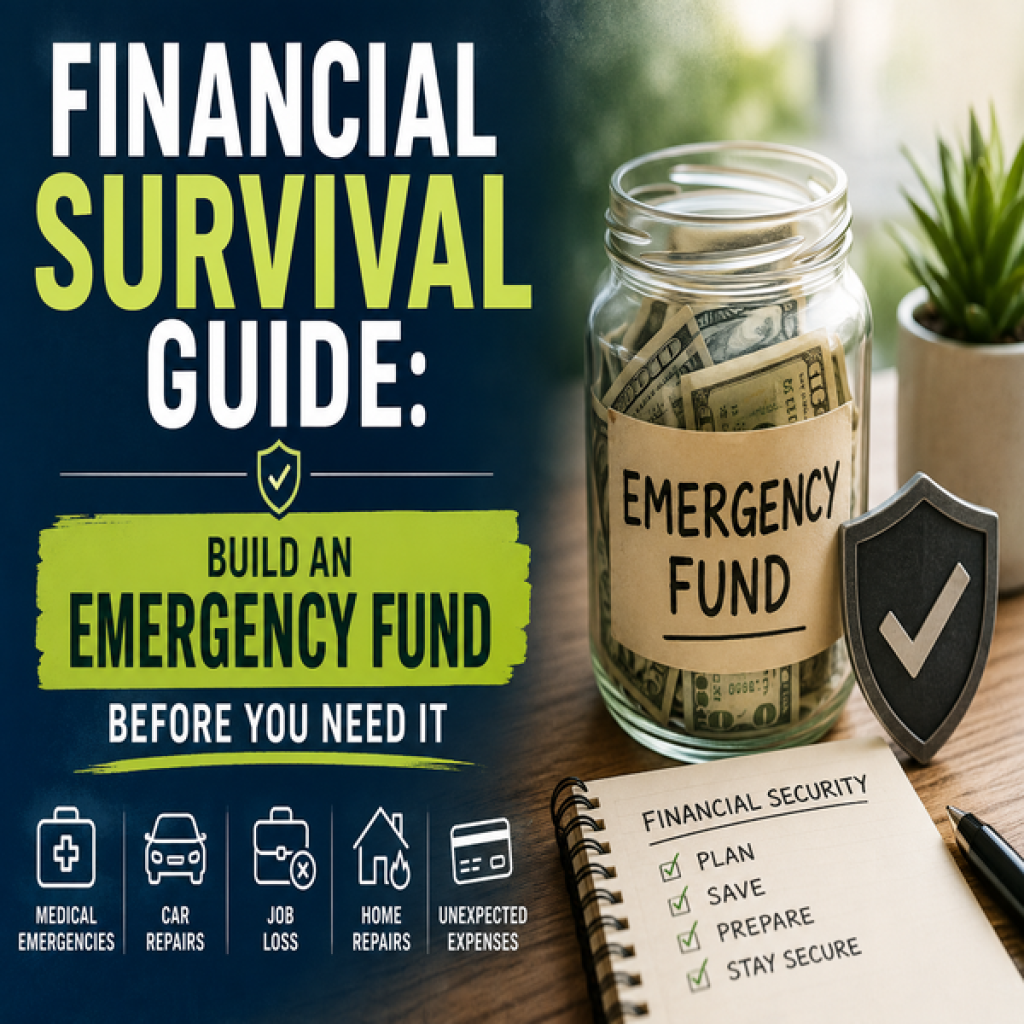
Unexpected expenses can strike at any time, from medical bills and car repairs to job loss. Learn how to build a strong emergency fund, protect your finances, reduce stress, and achieve greater financial security with practical saving strategies anyone can follow
Table of contents [Show]
You know that exact sinking feeling in the pit of your stomach. You are driving down the highway, finally feeling like you have a handle on your week, and suddenly the check engine light blinks on. Or maybe you walk out to your driveway in the crisp morning air and notice a totally flat tire. Life is an incredibly wild, unpredictable ride, and let us be completely honest with ourselves: it rarely goes exactly according to the meticulous plans we draw up in our heads. Unexpected car repairs, sudden job loss, a medical emergency, or even a leaky roof can throw even the most carefully crafted monthly budget into absolute chaos.
That is exactly where an emergency fund comes into the picture. It is your financial safety net, your personal shock absorber against life's inevitable curveballs. But for so many people, the very idea of building one can feel incredibly daunting, almost like standing at the bottom of a massive mountain and being told to climb it without any gear. Where do you even start when it feels like every single dollar is already spoken for? Please do not worry, because it is entirely achievable, no matter where your starting line happens to be.
Think of your emergency fund not just as a boring savings account for a rainy day, but as a direct investment in your own personal security, your mental health, and your ultimate freedom.
But What Then Is an Emergency Fund?
An emergency fund is a sum of money set aside specifically to cover unexpected expenses or financial emergencies, such as medical bills, urgent repairs, or sudden loss of income. It is not meant for regular spending, but rather to provide financial stability and reduce the need for borrowing during unforeseen situations.
Think of it as your “life doesn’t go as planned” money. Instead of panicking or borrowing, you just dip into that fund and handle things calmly. A simple way to picture it is like having an umbrella you don’t make use of every day, but when it starts raining you would be very glad you had it.
To get you to that place of confidence, we need a tangible game plan. Here are six practical, highly effective strategies to build your emergency fund and take back control of your financial life.
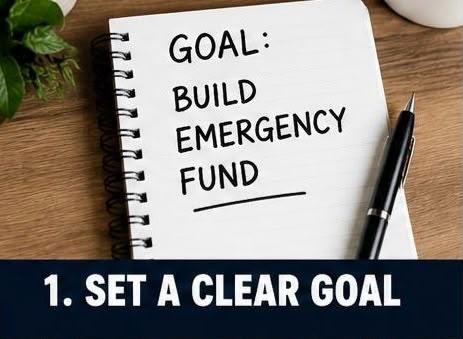
The very first thing you need to do is determine exactly how much money you need in this fund. A vague idea of saving more money is rarely enough to keep you motivated when things get tight. A common and highly recommended target is to save three to six months’ worth of essential living expenses. But to hit that target, you have to know what your essential expenses actually are. We are not talking about your current lifestyle with all the bells and whistles. We are talking about a bare-bones, survival-mode budget.
If you lost your job tomorrow, what are the absolute non-negotiables? You need to keep a roof over your head, so your rent or mortgage is at the top of the list. You need to keep the lights on and the water running, so utilities are next. You need to eat, but we are talking about basic groceries here, not dining out at fancy restaurants or ordering expensive takeout. You need basic transportation to get to job interviews or the grocery store, and you need to maintain your essential insurance policies like health and auto insurance.
Take a piece of paper and write down exactly what those bare-bones expenses cost you each month. Add them up. That number is your monthly survival number. Now, multiply that by three. That is your initial target. If you are a freelancer, an independent contractor, or someone whose income fluctuates wildly from month to month, you might want to aim for six months or even more, simply because your income is less predictable than someone with a salaried government job. The point is to customize this number to your unique life situation so that it serves you when you need it most. Having a clear, mathematically sound goal gives you a finish line to run toward.
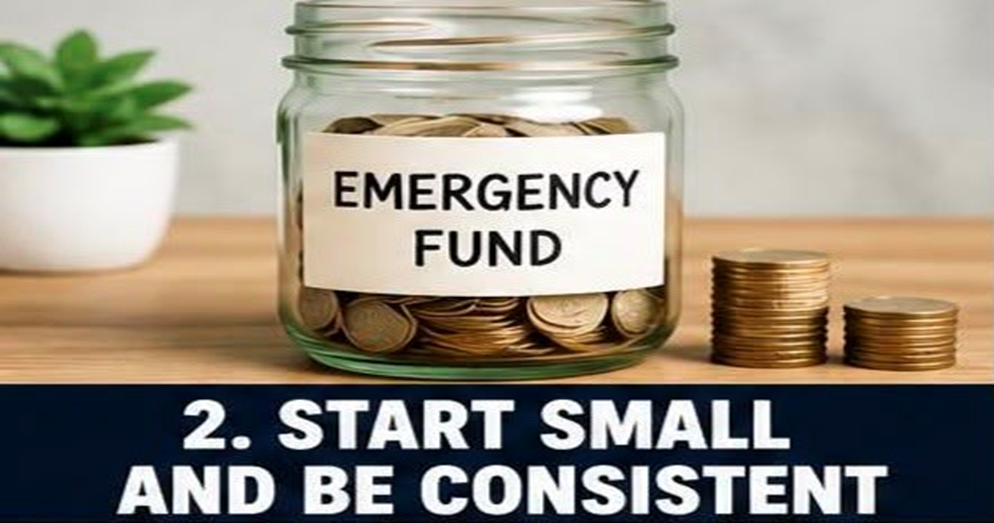
The most critical step in this entire journey is simply to start, and to start right where you are. Do not let yourself get bogged down or paralyzed by the total amount you eventually need to save. If you look at a goal of ten thousand dollars and you only have ten dollars to spare this week, it is incredibly easy to throw your hands up and say it is impossible. But even saving twenty or fifty dollars a week is a massive victory. The absolute secret ingredient here is consistency. It is about building a habit more than it is about the dollar amount in the beginning. Think about how water slowly carves through solid rock over time. Your small contributions will do the exact same thing to your financial goals.
To make this happen, you need to remove your own willpower from the equation. Willpower is a finite resource, and by the end of a long workday, you probably do not have the energy to manually log into your bank account and transfer money into savings. This is why you must set up an automatic transfer from your checking account to your savings account every payday. This "set it and forget it" approach ensures that you are consistently building your fund without even having to think about it.
Think of it like a subscription service for your own financial well-being. You pay for streaming services, gym memberships, and music apps automatically every month. Why not treat your future self with the exact same level of commitment? You pay yourself first, and the money accumulates automatically in the background of your life. Over time, these small, regular contributions will add up significantly, building incredible momentum and making the larger goal feel much more attainable. When saving becomes an invisible background process, you stop feeling the pinch of the money leaving your checking account, and you simply learn to live on what is left over.

Once you have committed to saving, you have to make sure you are keeping the money in the right place. Keep your emergency fund in a separate, easily accessible savings account. Do not mingle this money with your regular checking account where you pay for groceries and gas. There is a profound psychological trick to keeping your emergency fund in a completely different bank than your regular checking account. When you log into your banking app to check your balance before buying dinner, you do not want to see that massive pile of emergency cash staring back at you.
If you see it every day, your brain starts to think of it as available spending money. By keeping it at a separate institution, it remains out of sight and out of mind. This creates a necessary layer of friction. You know it is there if disaster strikes, but it is just inconvenient enough to access that you will not be tempted to dip into it for a spontaneous weekend getaway, a new pair of shoes, or a non-emergency purchase.
You should also strongly consider making this separate account a high-yield savings account. These accounts, which are most often offered by reputable online banks rather than traditional brick-and-mortar institutions, typically offer significantly higher interest rates. While a high-yield savings account is not going to make you rich overnight, the compounding interest will help your emergency fund grow much faster over time with absolutely zero extra effort on your part. It is literally free money just for keeping your cash in the right place. Just make sure the account you choose is easily accessible in case of a true emergency, allowing you to transfer the money to your checking account within a day or two without any withdrawal penalties.
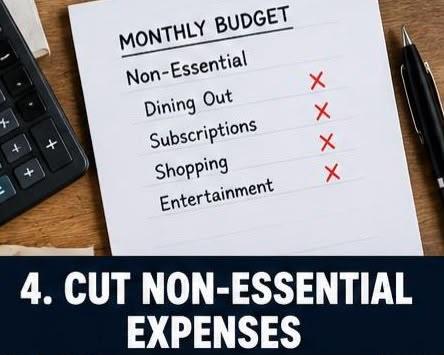
Now, let us talk about where to find the extra money to actually fund these savings goals. Knowledge is absolute power when it comes to your personal finances. You need to review your monthly budget to identify discretionary spending that can be reduced or eliminated. I am not talking about judging yourself or feeling guilty about your purchases; I am talking about gathering pure data. You might be genuinely surprised to see where your money is going when you lay it all out in front of you.
Once you have this data, you can start identifying areas where you can comfortably cut back without making yourself miserable. Maybe you notice you are spending a small fortune on daily coffees, or perhaps you are paying for three different streaming subscription services, but you only ever watch one. Maybe you can find cheaper alternatives for your weekend entertainment, like hosting a potluck dinner with friends instead of going out to an expensive restaurant.
The goal here is not to strip all the joy out of your life. Please, keep buying the things that truly make you happy. Instead, look for the "leaks" in your budget, the money you are spending mindlessly on things that do not actually bring you value or joy and plug those leaks with savings. Redirect these newly freed-up funds directly into your emergency savings. Every single dollar you redirect from a mindless purchase is a dollar closer to your ultimate financial security. It requires a bit of effort upfront to audit your life, but the long-term payoff is massive.
Another incredible way to accelerate your progress is to be highly strategic with any financial windfalls that come your way. Throughout the year, you might receive money that falls outside of your regular paycheck. This could be an annual tax refund, a performance bonus at work, a cash gift for your birthday, or even an unexpected inheritance. The temptation to take that "extra" money and immediately splurge on a vacation or a shopping spree is incredibly strong. After all, it feels like free money.
But if you are serious about building your safety net, you need to allocate any extra money directly into your emergency fund instead of spending it immediately. This single strategy can significantly accelerate your savings progress, shaving months or even years off your timeline. If the idea of saving all of it feels too restrictive and makes you want to rebel against your own goals, try the fifty-fifty rule. Take half of the windfall and put it straight into your emergency savings and take the other half and use it to treat yourself to something fun. This way, you get the psychological boost of enjoying your extra money, but you also make a massive leap forward in your financial security.
You can also create your own windfalls by decluttering your life and selling things you no longer need. Take a weekend to go through your closets, your garage, and your attic. You might have old electronics, pieces of furniture, or designer clothing gathering dust that could easily be sold online. This generates a fantastic lump sum of cash that you can immediately drop into your savings account, giving your emergency fund a massive boost while simultaneously simplifying your living space.
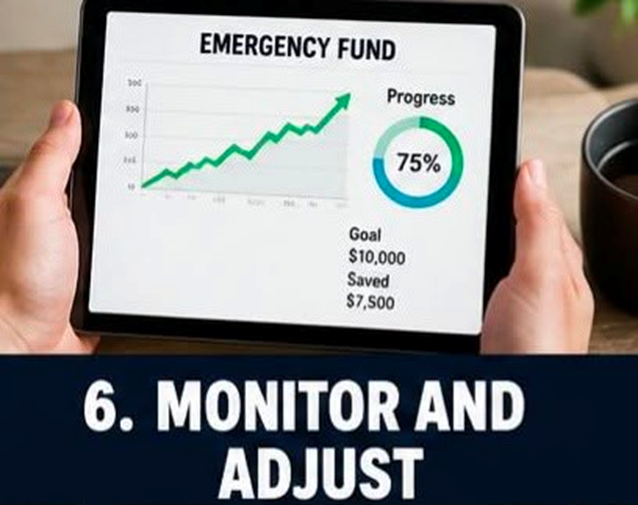
Building an emergency fund is not a "set it and forget it forever" kind of task. Life is incredibly dynamic, and your financial safety net needs to evolve right alongside you. You must periodically review your fund and your overall budget. As your expenses or your lifestyle change, you need to adjust your savings goal accordingly.
If you get a promotion and move into a slightly more expensive apartment, your baseline survival number just went up. That means your three-to-six-month target needs to go up, too. Conversely, if you finally pay off your car loan, your monthly expenses drop, which might mean your current emergency fund is suddenly more than enough. Increasing your contributions when possible, especially after a raise or a drop in expenses, can help you reach your new targets faster.
Monitoring also means understanding what actually constitutes an emergency so you do not drain the fund unnecessarily. A massive sale on a television is not an emergency. A last-minute invitation to a destination wedding is not an emergency. An emergency is an unexpected, necessary, and urgent expense, like a medical bill or a sudden job loss. You have to protect this money fiercely.
Of course, the entire point of having an emergency fund is to use it when a real crisis happens. When that day comes, do not feel guilty about transferring that money. It is doing its job by protecting you from going into debt. However, once the dust settles and the crisis has passed, your next financial priority must be to monitor your new situation and adjust your budget to replenish the fund. Go back to the basics, resume your automatic transfers, and build the fund back up.
Key Takeaway
Building an emergency fund requires making it a true priority in your life. It needs to be a core, foundational component of your entire financial plan, carrying the exact same weight and importance as your rent or your mortgage payments. Remember, the profound peace of mind and the deep financial resilience that an emergency fund provides are truly invaluable. It allows you to sleep soundly at night, knowing that you are prepared for the unexpected. So, start today. Start with whatever small amount you can manage. Follow these six steps, stay consistent, and build that beautiful safety net. You will thank yourself a thousand times over the next time life throws you a curveball.
Why does your salary disappear so quickly? Explore the everyday spending habits, financial pressures, and small expenses that can turn ₦150,000 into a mid-month money crisis.
Why do we spend money trying to look successful? Explore the psychology behind lifestyle spending, social pressure, and the hidden cost of looking financially fine.
Having enough money to buy something doesn’t always mean you can afford it. Learn a smarter way to evaluate purchases, protect your finances, and spend with confidence.