You Were Paid Yesterday. What Happened?
Why does your salary disappear so quickly? Explore the everyday spending habits, financial pressures, and small expenses that can turn ₦150,000 into a mid-month money crisis.
Loading...

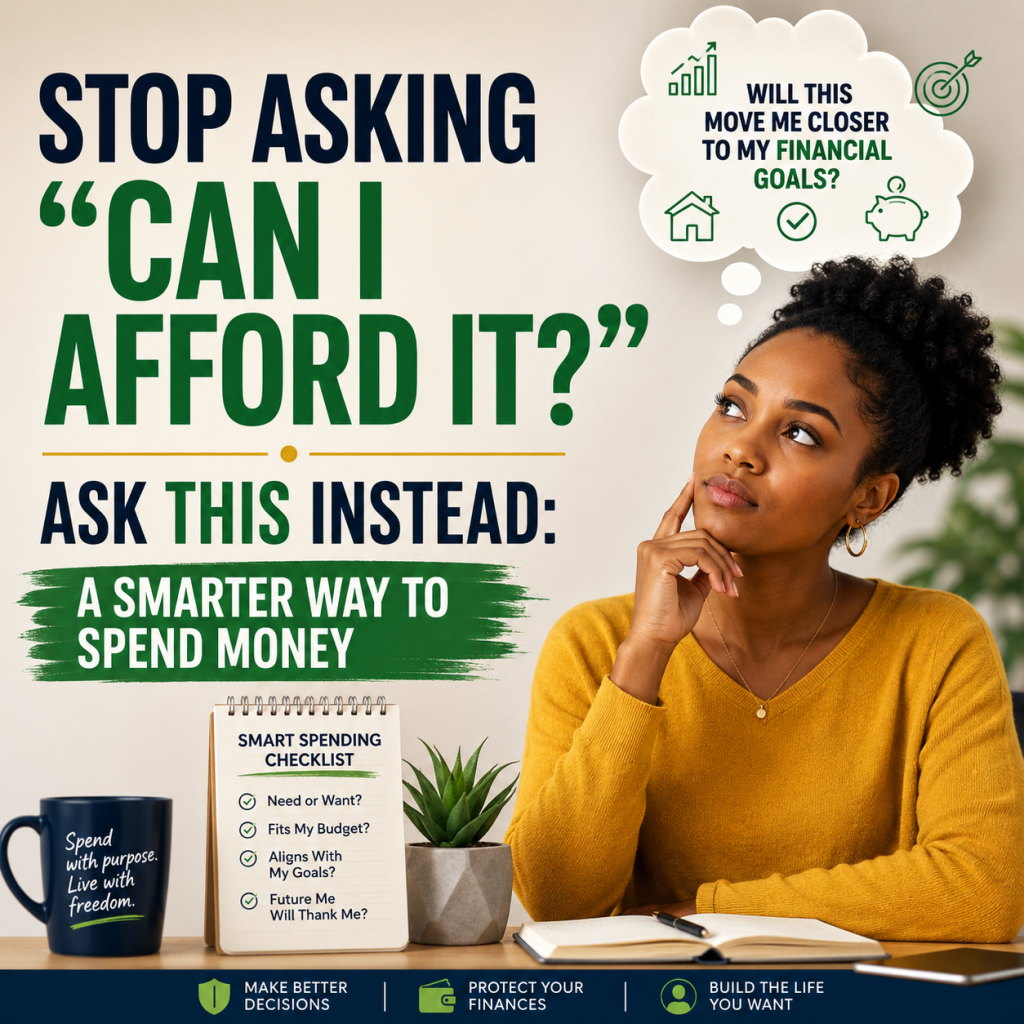
Having enough money to buy something doesn’t always mean you can afford it. Learn a smarter way to evaluate purchases, protect your finances, and spend with confidence.
Table of contents [Show]
There is a question most of us have asked ourselves countless times before buying something:
“Can I afford it?”
It sounds sensible, and in many situations, it is, because if you want to buy a phone for ₦200,000, for example, the first thing you will probably do is check your account to see whether the money is there. If you have ₦200,000 sitting in your account, it is very easy to look at that balance and think, well, the money is there, so what exactly is the problem?
Hmm, wait, because the problem is that having enough money to pay for something does not always mean you can comfortably afford it, and that little distinction becomes much more important when the purchase is large enough to affect everything else you need to do with your money.
You could have ₦500,000 in your account and still not have ₦500,000 available to spend, because some of that money might already belong to your landlord, your school, your transport budget, a debt repayment, an upcoming bill or the emergency you have not encountered yet. The money is sitting in your account, yes, but that does not mean it is sitting there with no purpose.
This is where I think we need to ask a better question, which is not simply whether we can pay for something today, but what our financial situation is going to look like after we have paid for it.
“What will my financial situation look like after I buy this?”
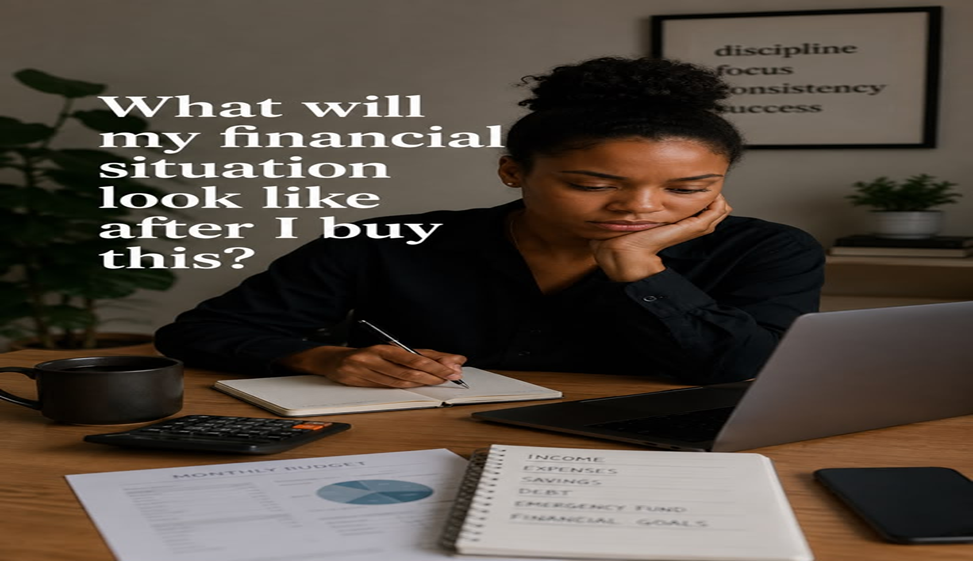
That question changes the conversation completely because you are no longer looking only at whether you can make the payment today; you are thinking about what happens after the money leaves your account, and honestly, that is where a lot of spending decisions become interesting.
Imagine you receive ₦400,000 and, after waiting for your salary for what felt like forever, you finally feel as though you can breathe a little, only to see a phone you have wanted for months selling for ₦250,000. You check your account, the ₦400,000 is there, and if the only question is whether you can afford a ₦250,000 phone, the answer appears to be yes because the mathematics does not look particularly complicated.
But now add the rest of your life to the calculation.
Suppose you have ₦100,000 worth of bills coming up, you need about ₦50,000 for transportation and food before your next income arrives, and you have been trying to put at least ₦50,000 into savings. Hmm, wait again, because that ₦400,000 does not look so free anymore when you remember that it already has several responsibilities attached to it.
This is one reason your bank balance can be a little deceptive when you are making spending decisions. Your balance tells you how much money is currently in your account, but it does not tell you how much of that money has already been spoken for, and when you spend money that already has a job, the problem usually does not disappear; it simply moves somewhere else.
If you think about it, the bill still has to be paid, the food still has to be bought, the transport money is still needed and the savings you planned to build are now smaller than they were supposed to be, so eventually you may find yourself borrowing, dipping into another account or wondering how ₦400,000 managed to disappear so quickly.
That is why, before deciding that you can afford something, especially something expensive, it helps to look at what your money is already supposed to do and whether there is genuinely enough left over for the new purchase.
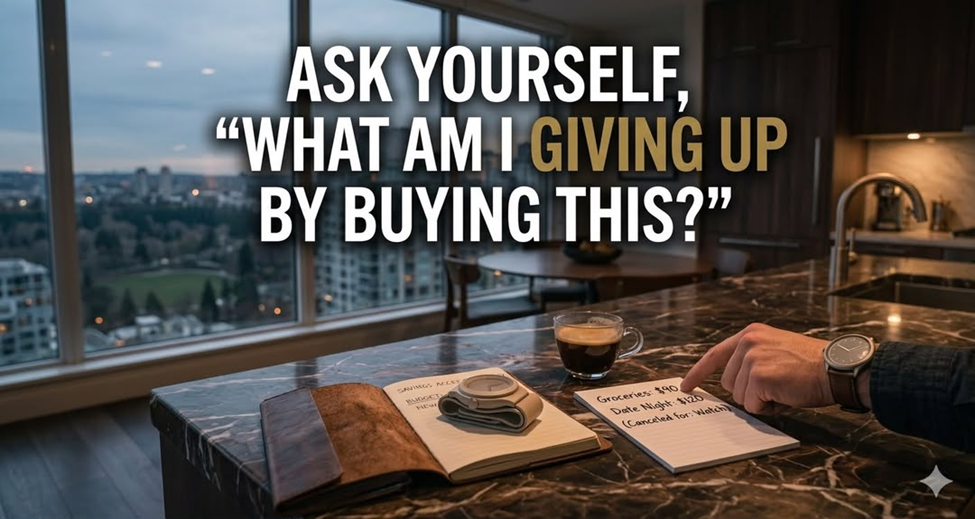
This is one question I think we should ask much more often because every time you spend money on one thing, you are choosing not to spend that same money somewhere else, even though we rarely think about the second half of the decision when we are excited about the first.
It does not mean you need to turn every purchase into an economics lecture, because honestly, nobody has the emotional energy to calculate the opportunity cost of a plate of jollof rice, but when you are about to spend a significant amount of money, it is worth pausing long enough to think about what else that money could do for you.
Suppose you have ₦150,000 that is not currently assigned to anything, and you are considering using all of it to buy something you have wanted for a while. You could buy it, enjoy it and move on with your life, and there is nothing automatically wrong with that if the purchase fits comfortably into your finances, but that same ₦150,000 could also become part of your emergency savings, reduce a debt, pay for a course, contribute towards a bigger goal or simply sit there as a little financial breathing room.
None of those choices is automatically better than the others, because what matters is that you recognize the trade-off before you make the decision.
Sometimes we say, “It is only ₦150,000,” because our attention is completely fixed on what we are getting, whereas thinking about what we are giving up can make the decision look very different. Instead of asking only whether you want the thing, you begin asking whether you want it more than you want what that money could do for you somewhere else.
Then ask, “Will this purchase affect me next month?”
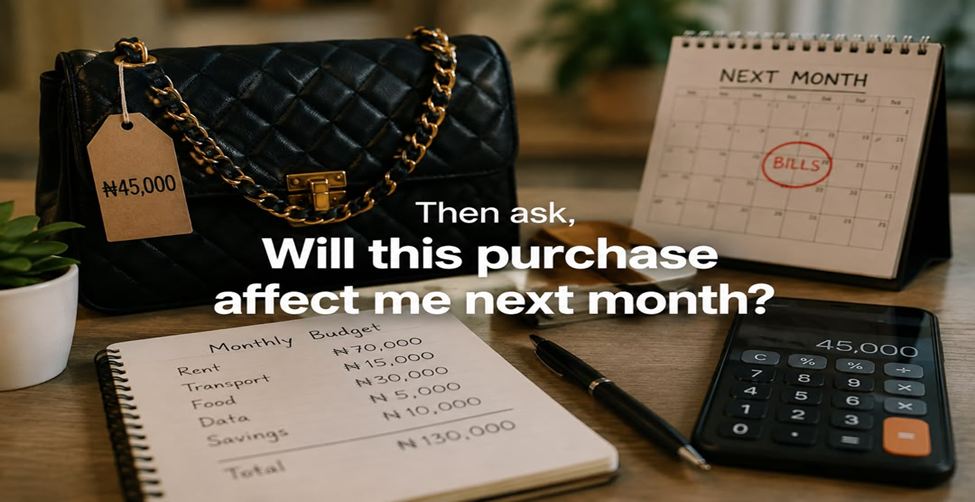
This is where spending gets interesting because we tend to judge purchases using today’s financial situation while forgetting that tomorrow is still coming. You might have enough money today, but what happens after the money leaves your account?
If you spend ₦200,000 today and your next income is not coming for another three weeks, those three weeks still exist. You will still eat, still move around, still pay bills and still have other things demanding your attention, and none of those expenses disappear simply because you bought something you wanted.
I don’t know about you, but this is one of the easiest things to overlook when money comes in, especially after a period when things have been tight and seeing a healthy account balance finally gives you that feeling that you can breathe again.
That feeling can make spending seem safer than it really is.
This matters even more when your income is irregular or when several financial responsibilities are competing for the same money, because someone could have ₦600,000 in their account and still be in no position to comfortably spend ₦300,000 on something they want if that ₦600,000 is expected to cover their expenses for the next two months.
The money is there, but the timing matters, and this is why cash flow can sometimes tell you more than your bank balance alone. You need to know what money is coming in, what is going out, when your important expenses are due and how much you will realistically have left after dealing with them.
Once you start looking at your finances this way, you stop seeing every amount in your account as spending money, and that little shift can save you from a surprising amount of unnecessary financial stress.

This one has less to do with mathematics and more to do with knowing yourself, because we like to believe our spending decisions are always rational, but human beings are emotional creatures and money does not magically remove that part of us.
Sometimes you buy something because you genuinely need it, while other times you are stressed, bored, excited, trying to reward yourself, trying to keep up with people around you or responding to an advertisement that has somehow convinced you that your life will be significantly worse without whatever it is selling.
The funny thing is that you can be perfectly satisfied with something you already own until you see someone else with the newer version. You have been using your phone happily for two years, then you see five people online with a new model and suddenly your own phone starts looking like it has personally offended you, which is funny because nothing about your phone changed between breakfast and lunchtime.
Tell me why we do this.
The same thing happens with clothes, gadgets, restaurants, holidays and even lifestyles. You see something repeatedly, you become familiar with it, and after a while, the thing you never thought about owning begins to feel like something you should have.
That is why I like asking whether you would still want something if you had never seen it online or nobody around you had it, because the answer will not always be no, and that is important. Sometimes you genuinely want the thing, you have wanted it for months, it solves a real problem and you would buy it whether or not anyone else had it, but other times you realise that the desire appeared almost entirely because you were exposed to it.
Once you notice that pattern in yourself, you become much better at telling the difference between something you genuinely want and something you were temporarily persuaded to want, and that distinction can save you from spending money on things that seemed urgent for about forty minutes.
There is something about urgency that changes the way we spend because when you believe you have to buy something immediately, your attention shifts towards getting it rather than deciding whether getting it is actually a good idea. Every little reason to wait starts sounding inconvenient, while every reason to buy becomes strangely convincing, and of course, that is exactly how impulse spending gets its power.
Giving yourself a waiting period can interrupt that process, especially when the purchase is expensive or completely unplanned. You could wait until the next day for something relatively small, while a much larger purchase might deserve several days or even a few weeks of consideration, depending on the cost and your circumstances.
You may still decide to buy it, but at least the decision has survived beyond the initial excitement, which matters because desire can change surprisingly quickly.
Something can feel absolutely necessary at 10 p.m. while you are scrolling through an online store, yet by the following afternoon, after you have slept, gone about your day and remembered that your rent is due soon, it may not seem nearly as urgent.
I wish I could say I learned this lesson early, but I did not, and that is precisely why I think giving yourself time before spending can be useful. It gives you enough distance from the initial excitement to figure out whether you genuinely want the thing or whether you simply wanted it very badly at that particular moment.
And if you still want it after the excitement has settled, that tells you something too.
The goal is not to talk yourself out of every purchase; it is to make sure the purchase is coming from a decision rather than a moment.
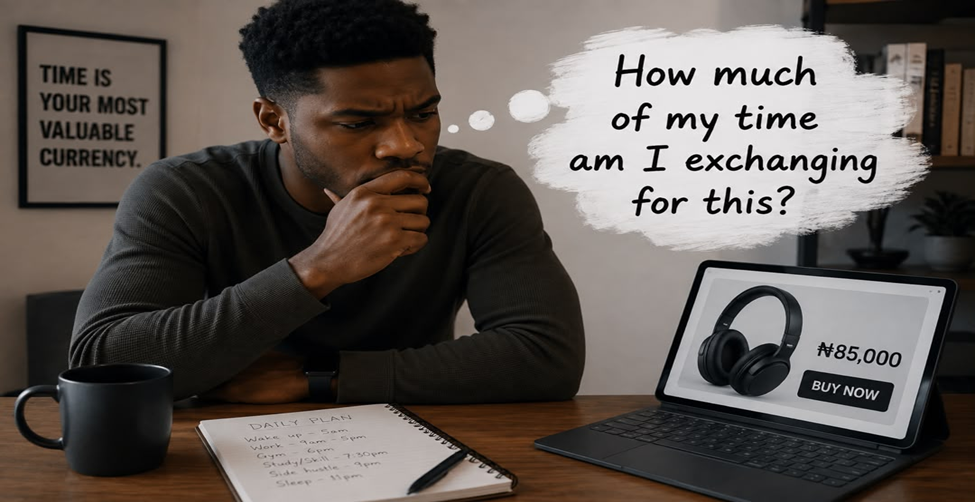
Money is interesting because we often think about it as numbers while forgetting where those numbers came from. That ₦100,000 sitting in your account represents something you gave in exchange for earning it, and depending on your income, it might represent several days of work, several weeks of careful saving or a portion of the effort you put into keeping your life running.
You cannot get that time back, although I am certainly not suggesting that you start calculating your working hours every time you buy lunch because that sounds like an exhausting way to live.
For larger purchases, however, thinking about the relationship between your money and your time can change the way you look at what you are buying. If something costs ₦200,000 and you realize that amount represents a substantial part of the time and effort you put into earning your income, you may start asking whether what you are buying gives you enough value in return.
Sometimes the answer will be yes, because the purchase makes your work easier, lasts for years, solves a problem you have been dealing with or improves your quality of life in a way that genuinely matters to you.
Other times, you may look at what you are about to buy and realize that you are exchanging a significant amount of your earnings for something you will probably stop caring about within a few weeks, and honestly, that realization can save you money.
Another mistake people make is looking only at what something costs to acquire while ignoring what it costs to keep it, and this becomes particularly important when you are buying something that comes with recurring expenses.
A car is an obvious example because the purchase price is only the beginning; there is fuel, maintenance, insurance, repairs and all the other expenses that come with owning one. A new phone may need accessories, data, repairs or replacement parts over time, while something as seemingly simple as getting a pet comes with food, healthcare and other recurring expenses that have nothing to do with the amount you originally paid to bring the animal home.
So when you are considering something expensive, especially something that will continue costing you money after the initial purchase, think about the full financial commitment rather than the price tag alone.
Because sometimes you can afford to buy something but cannot comfortably afford to maintain it, and those are two very different situations.
This is also why the question “Can I afford it?” can be a little too shallow on its own. You might be able to afford the initial payment, but if owning the thing creates a monthly expense that your current income cannot comfortably handle, the real cost is much higher than the number you saw on the price tag.
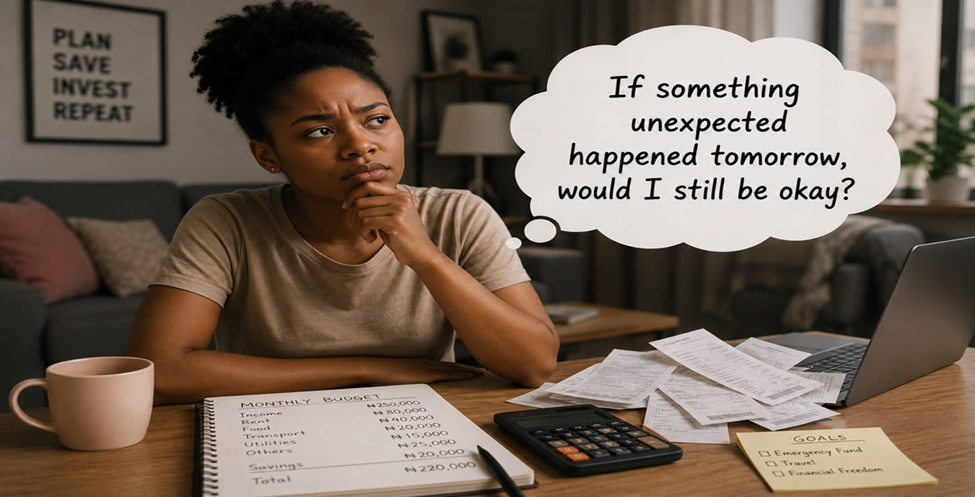
This is probably one of the most useful questions to ask before making a large purchase: “If something unexpected happened tomorrow, would I still be okay?”
You do not need to predict exactly what that emergency will be because life is unpredictable enough without asking us to write down its plans in advance. The point is simply to consider whether the purchase would leave you with absolutely no room to deal with something unexpected.
Because an emergency does not care that you had plans for your money.
Your car can develop a fault, your phone can break, you can suddenly need to travel, a family responsibility can appear out of nowhere or your income can arrive later than expected, and when you have some financial cushion, an unexpected expense can be inconvenient without completely destabilizing you.
When you have spent everything you had on something you wanted, however, that same expense can become a crisis.
That is why savings are valuable for reasons beyond reaching an impressive number in your account. Sometimes the most useful thing about having money set aside is that it gives you options when life refuses to cooperate with your plans, and life has a habit of doing exactly that.
There is a danger in conversations about financial responsibility where everything starts sounding like you are supposed to save every naira, avoid anything enjoyable and feel guilty whenever you spend money on yourself, and honestly, I don’t think that is the point at all.
You are allowed to enjoy your money, and you are allowed to buy things that make you happy, take yourself out, travel, buy nice clothes, upgrade your phone or spend money on experiences that matter to you. Financial discipline should not turn your life into one long exercise in deprivation where every purchase comes with a side of guilt.
The goal is to make sure your enjoyment does not consistently come at the expense of your financial stability, because there is a difference between saying, “I cannot spend this money because I am trying to be financially responsible,” and saying, “I have planned my finances well enough that I can spend this money without creating a problem for myself.”
The second position gives you much more freedom because you are not afraid of spending; you simply understand what your spending can and cannot comfortably do.
And that, to me, is a much healthier relationship with money.
The next time you are about to buy something, especially when it is expensive or completely unplanned, do not stop at “Can I afford it?” Think about what your finances will look like after the purchase, what the money was originally meant for, what you are giving up by spending it and whether the purchase will affect your ability to handle next month’s expenses.
Think about why you want it, whether the desire would still exist if you had never seen it online, how much of your working time the purchase represents and whether there are expenses that will continue long after you have made the initial payment.
Then ask yourself whether you would still be okay if something unexpected happened shortly afterwards, because there is no point buying something that makes you happy today if the same purchase leaves you panicking about money two weeks later.
You do not need to run through this entire list every time you buy something, because nobody needs a financial committee meeting before buying toothpaste, but when a purchase is large enough to affect your finances, slowing down and asking better questions can make a huge difference.
And perhaps that is the question we should have been asking all along:
“Can I afford this and still be okay afterwards?”
That question forces you to look beyond the price tag, beyond today’s bank balance and beyond the excitement of finally getting what you want, because it makes you think about the life you still have to live after the purchase.
And that is where better money decisions usually begin.
Why does your salary disappear so quickly? Explore the everyday spending habits, financial pressures, and small expenses that can turn ₦150,000 into a mid-month money crisis.
Discover 6 common reasons why budgets fail and learn practical, realistic strategies to create a budget that actually works, lasts, and helps you reach your financial goals.
Financial literacy is one of the most valuable gifts parents can give their children. You can help your kids build smart saving, budgeting, and spending habits for life. If you want them to grow into financially confident adults, teaching them these 7 money lessons can make all the difference.