

The Financial Hangover: How to Stop the Shame-Spiral and Forgive Your Money Mistakes
Your mistakes work the same way those cracks do. If you try to cover them up with more debt or with things that make you look like you’re doing fine, you’re right back in the shame spiral, and it’s a bit like buying a new bowl when the one you already own could be repaired. The new bowl doesn’t fix anything, and the old one is still sitting in the cupboard, broken.

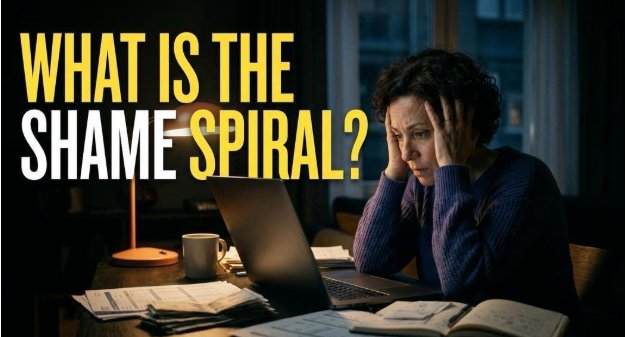
Losing money is bad enough, but what really wears on you is how long it stays in your head. You could be doing something completely unrelated, washing dishes or sitting in traffic, and out of nowhere you’re back at that one decision, remembering how much you lost, what you could have done with the money, and everything you should have thought about before you made the move.
Maybe you put money into something you were convinced would work, and it fell apart a few days later. Or you gave it to someone you genuinely cared about, and now you’re stuck wondering if you’ll ever see it again. Either way, you can’t reverse it, and you can go over it a hundred times and wish you’d done it differently, but the money is still gone.
Then comes the anger, and it’s usually pointed at yourself. It isn’t always that you didn’t know better, since looking back you can see the things you could have done differently, and that stings more because the money took real time and effort to build. There’s actually a name for that lingering feeling after a bad financial decision. I like to think of it as a financial hangover. Let me explain a little. This means the money might be gone, but the experience tends to stick around much longer than you’d expect.
But What is the Shame Spiral?

We live in a time where people share almost everything. At dinners, online, anywhere you will hear conversations about breakups, childhood issues, therapy, even personal struggles. People post their daily lives and deepest insecurities for strangers to see.
But when it comes to money, it’s a different story. People can talk about almost anything, but let the conversation turn to their finances, how much they earn, how much they’ve lost or the mistakes they’ve made, and then, there’s not much to say. It’s one of those things people would rather keep to themselves, even when they’re struggling with it.
The shame spiral is that cycle you fall into after making a money mistake. It usually starts with one decision, maybe you overspent, lost money, or trusted the wrong thing. At first, it begins with just regret. But then you find yourself going over everything again. You start wondering what you missed, whether you should have known better and why you made that decision in the first place. Before you know it, you’re being harder on yourself than anyone else could possibly be.
The shame spiral usually turns on one small change in the question. A person starts out thinking "that was a mistake," and somewhere along the way it becomes "what is wrong with me?" Once that happens, the shame grows, and avoidance comes along with it. A person even stops checking the account, puts off fixing the problem, and acts like it isn't there for a while. Meanwhile the decision keeps replaying, and every time it does, there's another red flag they ignored.
The longer you stay in that place, the worse it tends to get. If you're not careful, you end up avoiding the problem so long that it creates more stress and more pressure, and sometimes it leads to more bad decisions, since you already know better and you're just trying to get away from how you feel. At that point the money is only part of it. You're caught in a loop of mistake, shame, avoidance, and bigger consequences, and each stage feeds the next one.
Carrying all that shame won't bring the money back or undo what happened. All it does is keep a person stuck, replaying the past and dreading what comes next. If we want to move forward, we have to bring this out of hiding, look at it honestly, take it apart, and figure out why it has so much hold on us. So how do you actually climb out of it and get your confidence back? There are five steps, and a couple of them are uncomfortable, so let's go through them one at a time.
Step One: Turn On the Lights

The first step toward forgiving yourself about money is probably the scariest one, since it asks you to do the opposite of what every instinct in you is telling you. When a big financial mistake happens, most of us want to hide. We delete the banking app off the home screen, let the emails from the brokerage pile up unopened, and shove the purchase we regret to the back of the closet under a stack of old sweaters. I’m not judging, because I’ve done a version of this myself.
The trouble is that hiding works for a little while, and that’s what makes it so tempting. If you’re not careful, it gets easier and easier to pretend nothing happened, and you start telling yourself that the anxiety will drift off on its own if you ignore it long enough. It never does, though, because every day you spend avoiding the problem feeds the shame a little more, and shame grows best when nobody is looking at it.
So the first thing to do is stop running, turn around, and switch the lights on. It’s not going to feel great, but you can’t deal with something you won’t look at. All this really means is logging into the account and looking at the number. Write it down, and if you can stand it, say it out loud to yourself too, which feels strange the first time. It won’t fix anything on its own, but it does change one thing, because once the number is on paper it’s real, and a real number has a limit to it.
That limit matters more than it sounds, since the alternative is whatever your mind has been drawing in the meantime. When you keep avoiding the account, your mind fills in the blanks, and it rarely does that kindly. You can spend weeks picturing something enormous, then finally look and find a figure on a screen. It might be a big figure, and it might be a bad one, but at least it’s a figure, which is more than you can say for whatever you were imagining. If you’re not careful, the guessing ends up costing you more than the actual amount ever would.
So once you’ve seen it clearly, the whole thing takes a big turn. It stops being a huge unknown and becomes something you can take on a piece at a time, and that’s what makes the next steps possible. Always remember that a math problem can be solved, no matter how large it is, but only after you’ve written it down.
Step Two: Cut the Anchor

Once the number is on paper, you’ll probably see some things you don’t like, and the next step is dealing with them. I call it cutting the anchor, and it’s hard, because it means giving up on something you’ve already put a lot into. What you’re up against is the sunk cost fallacy. It’s that little voice that says you’ve come too far to stop now, so you keep sending good money after bad just because so much has already gone in. Maybe it’s the side hustle that’s eating your savings, and you keep feeding it because quitting feels like admitting you lost. Or maybe it’s the nice car that’s wrecking your budget, and you hold onto it because you don’t want the neighbors seeing it leave the driveway.
Stopping that takes more courage than most people give it credit for, since you have to accept that the money you’ve already spent is gone. It’s in the past, and nothing you do now will bring it back. All you can decide today is what happens to the money you still have, and your job is to protect that, along with your peace of mind.
Now remember, when you cut the anchor, you’re deciding that what went wrong before doesn’t get to steer what comes next. That’s usually the point where you start getting your power back, and it’s also what makes step four possible.
Step Three: Untangle the Worth

Once you’ve stopped feeding the losses, the harder work starts, which is separating how much you’re worth from how much you have. Those two get tangled together without you noticing, and a money mistake pulls the knot tight, so tight that a bad month can start to feel like a verdict on who you are.
That’s why it helps to remember what a bank account is. It’s a tool, and that’s all it is, something that helps you get around in a world that runs on money. It says nothing about how smart you are, how good you are, or how much you matter, and since the knot has been tied for a long time, you may have to tell yourself that more than once before it loosens.
It also helps to look at how the mistake really happened, because the story you’ve been telling yourself is probably harsher than the facts. A bad investment doesn’t make you stupid, it means you took a risk and it didn’t pan out. Buying something you couldn’t afford doesn’t make you broken either, since most likely you were reaching for comfort or a little joy in a weak moment, and a company with a very large marketing budget knew exactly how to meet you there.
And you’re far from the only one this has happened to. Everyone who has ever handled money has gotten it wrong at some point, even the richest investors, who have lost huge amounts backing the wrong companies, buying at the peak, and trusting people they shouldn’t have. The difference is that they don’t treat those losses as proof of anything about themselves, but as part of the cost of playing, and once you start seeing your own losses that way, the knot finally has room to loosen.
Step Four: Forgive the Past Version of You

This untangling naturally leads to the most profound phase of healing which begins by looking back at the person who made the mistake and offering them a radical forgiveness.
When conducting an autopsy of financial mistakes, it is so easy to be cruel, look back at your past self with disdain and think about how blind you were, how the red flags were everywhere, and how you should have known better. But hindsight is twenty-twenty six, and judging a past decision with present-day knowledge is a rigged game. You are judging the past version of yourself using the wisdom that the mistake itself gave you. It is an unfair trial.
Instead of cruelty, you must look at the version of yourself who made the mistake and realize that they were doing the absolute best they could with the information, the emotional state, and the beliefs they had at that exact moment in time. Perhaps the bad investment was driven by a desperate, exhausting desire to finally get ahead. Maybe you were tired of living paycheck to paycheck, tired of the anxiety, and a window appeared that looked like an escape route. You wanted to provide a better life for your families or escape a soul-crushing job that was draining your light and that’s completely understandable. The execution may have been flawed, but the intention was rooted in hope.
Forgiveness means giving yourself permission to grieve the loss, and then giving yourself permission to move on. It means accepting that the timeline has shifted and that a delayed timeline is not a destroyed life.
The human capacity for resilience is breathtaking. Think about everything you have already survived in your lives. You have survived heartbreak, illness, profound loss, and deep disappointment. Once the knot starts to loosen, there’s something else you can see more clearly, which is that you’ve been through a reset before. Most of us have rebuilt something from the ground up at some point, whether that was a job, a relationship, or a whole way of living, and you came through it. A setback in your finances is the same kind of thing, and it can be recovered from, even though it doesn’t feel that way right now.
The money is gone, and there’s no point pretending otherwise. But what made you able to earn it in the first place wasn’t in the account, and it didn’t leave with it. Your skills are still yours, and so are your relationships, your creativity, and the ability to learn and adjust that got you this far. A mistake can cost you a sum of money, but it can’t reach any of those, which is why the rebuilding can begin from a stronger place than it feels like.
Step Five: Lay the First New Brick

As the heavy fog of shame finally begins to lift, you are left standing on an empty plot of land. The final phase of this journey is learning how to lay the first new brick. Rebuilding this trust takes time, and it requires small, gentle actions. Now there is no need to immediately jump back into the stock market, start a new business, or make massive financial moves. You just need to prove to yourself, in tiny, microscopic increments, that you are capable of managing your resources safely again.
The rebuilding itself usually looks pretty ordinary. It might mean picking up a friendly book on personal finance, the kind that explains things in plain words, so that what used to frighten you slowly becomes something you understand. Or it might mean sitting down on a Sunday morning and going through the week’s spending without any judgment, just watching where the money went and letting yourself be curious about it instead of scolding yourself.
Small things like that matter more than they seem, since each one rebuilds a little of the trust you lost in yourself. They add up slowly, and as they do, the anxiety eases and a quieter kind of confidence takes its place. After a while you look back and realize the mistake didn’t break you, and that what it left behind was a lesson.
The Golden Repair
There’s a Japanese art called kintsugi that fits this well. When a piece of pottery breaks, the people who practice it don’t throw it out, and they don’t glue it back together so neatly that nobody can tell. They mend the pieces with lacquer mixed with powdered gold, silver, or platinum, so the cracks end up being the most noticeable part of the bowl.
Your mistakes work the same way those cracks do. If you try to cover them up with more debt or with things that make you look like you’re doing fine, you’re right back in the shame spiral, and it’s a bit like buying a new bowl when the one you already own could be repaired. The new bowl doesn’t fix anything, and the old one is still sitting in the cupboard, broken.
So stop hiding the cracks. The scars you’re carrying show that you went through something and kept going, and that’s proof you can handle it. Fill them with what you learned, let the experience build you up, and you may find that once you quit pretending, you’re calmer with money and probably earning more because of it.
What's Your Reaction?
 Like
0
 Dislike
0
 Love
0
 Funny
0
 Wow
0
 Sad
0
 Angry
0

Comments (0)